17 Nov 2025
Unlocking the value of end-of-life magnets: JGI-HYDROMETAL’s Advanced Hydrometallurgy
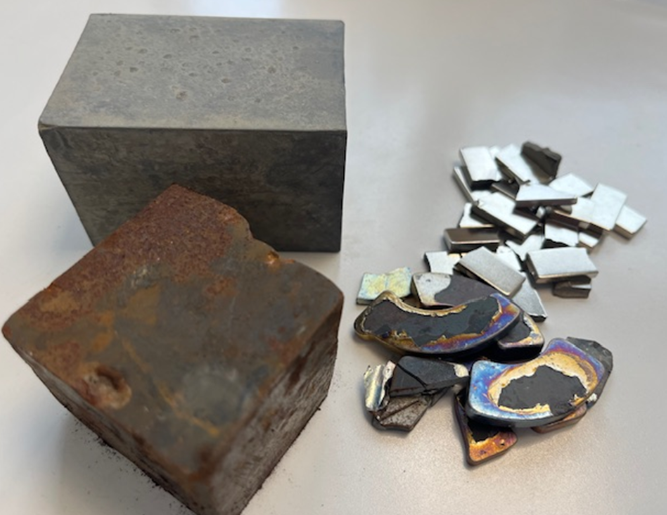
Within the REEPRODUCE project, partner JGI HYDROMETAL has developed a hydrometallurgical process capable of recovering rare earths from end-of-life permanent magnets of various compositions using advanced hydrometallurgy.
Looking back at the upscaling process, what were the key steps and challenges, and how did the team overcome them?
Upscaling introduces a wide range of risks — including ergonomic, environmental, and chemical hazards. Establishing robust safety protocols was essential, not only for the current phase but also to lay a foundation for future deployment. Many of the risks identified during the campaigns will remain relevant on an industrial scale and must be carefully managed. To anticipate and address these risks, we conducted thorough and interdisciplinary risk analyses, which allowed us to design robust safety protocols and mitigate potential hazards effectively.
What are some of the most valuable lessons learned from operating the process, particularly in terms of handling diverse feedstock compositions and scaling up the process?
The developed installation successfully demonstrated the process, developed at laboratory scale by the R&D partner TECNALIA, in an industrial setting. While the variable chemical composition of the raw materials could easily be overcome, mechanical constraints did arise—particularly with smaller magnet pieces. These tend to clog the leaching box system, presenting a challenge for continuous operation.
The most critical step requiring improvement to ensure upscaled viability is the initial leaching stage of permanent magnets. Handling these materials, managing the reaction kinetics, and controlling side reactions generated during the process are key issues. Addressing those aspects is essential to guarantee a safe, efficient, and economically sustainable transition to industrial-scale production.
How do you see this process contributing to future commercial applications? Has this validation trial helped clarify the market potential or strategic direction for this technology?
The validation test confirmed that the process is feasible within a conventional hydrometallurgical facility. The process has proven effective in treating spent permanent magnets of varying compositions and shapes.
However, to enable full industrialization, several aspects still require improvement:
- Large enough leaching batch volumes to maintain productivity, while properly managing the reactions. Validating the reuse or recovery of co-products is essential to enhance the circularity and sustainability of the process.
- Implementing robust wastewater treatment strategies is critical to ensure the process remains environmentally sustainable at industrial scale.