01 Jun 2026
Crossroads of Innovation: Shared Raw Materials Challenges
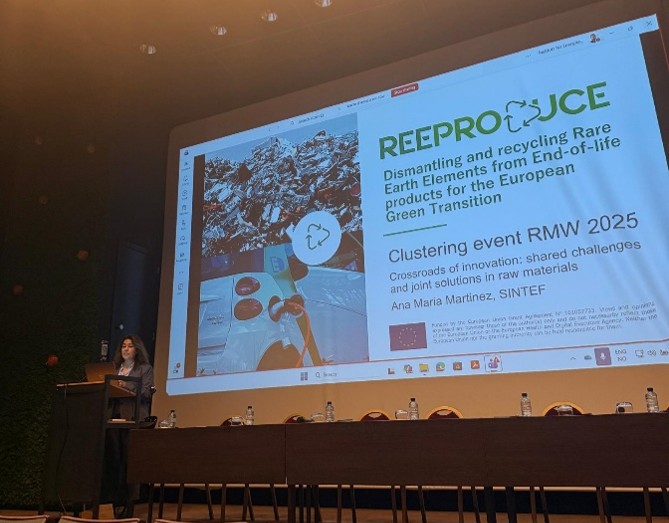
REEPRODUCE took part in “Crossroads of Innovation: Shared Challenges and Joint Solutions in Raw Materials” – a clustering side event co-organised during Raw Materials Week 2025 by the REESOURCE project together with ten other Horizon Europe projects active across the raw materials value chain. The workshop was held on 21 November 2025 in Brussels and was designed to bring together EU-funded projects, industry, and policymakers to discuss common bottlenecks, share concrete solutions, and generate input for a joint policy brief.
The focus of the event was not on presenting projects separately, but on identifying the shared challenges that still prevent promising solutions from reaching full scale in Europe. The event aimed to highlight bottlenecks of a technical, environmental, regulatory, and social nature, explore synergies across primary, secondary, and advanced material value chains, and build collaboration between research, industry, and policy. The event also set out to provide structured input for a joint policy brief supporting the Critical Raw Materials Act, the Green Deal Industrial Plan, and the STEP platform.
REEPRODUCE was one of the co-organising projects and contributed to the second thematic session, “Stage for Innovative and Sustainable Secondary Raw Materials: From Waste to Value and Advanced Materials.” In that session, Dr. Ana Maria Martinez (SINTEF) presented “From Waste to Permanent Magnets: Achievements of the REEPRODUCE 7 Pilots Across the PM Recycling Value Chain.” This positioned REEPRODUCE within a broader discussion on how Europe can strengthen circular and resilient value chains for critical raw materials through innovation and collaboration.
The clustering event attracted strong interest. According to the attendance figures shared after the workshop, there were 115 registrations in total, including 91 for in-person attendance. On the day, 52 participants joined onsite and 25 joined online. Importantly, 104 registered participants agreed to receive the policy brief and follow-up materials, indicating strong interest in the joint outcomes and next steps emerging from the event. These follow-up activities include the preparation of a policy paper led by the REESOURCE consortium. The organisers also integrated an interactive audience survey into the final panel discussion so that stakeholder input could feed directly into the joint brief.
Overall, the event showed the value of clustering beyond dissemination. By bringing together projects working on extraction, recycling, advanced materials, and permanent magnets, the event created a space to compare barriers, identify transferable solutions, and connect project results with policy needs. For REEPRODUCE, participation in this clustering exercise helped place its pilot achievements within a wider European conversation on industrial scale-up, collaboration, and the future of critical raw materials in Europe.
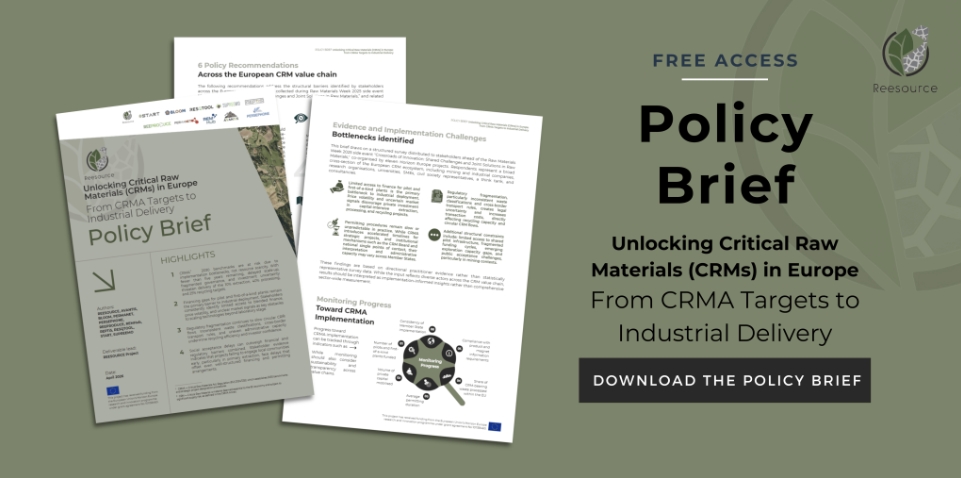
The joint policy brief and policy paper are now available on Zenodo.